
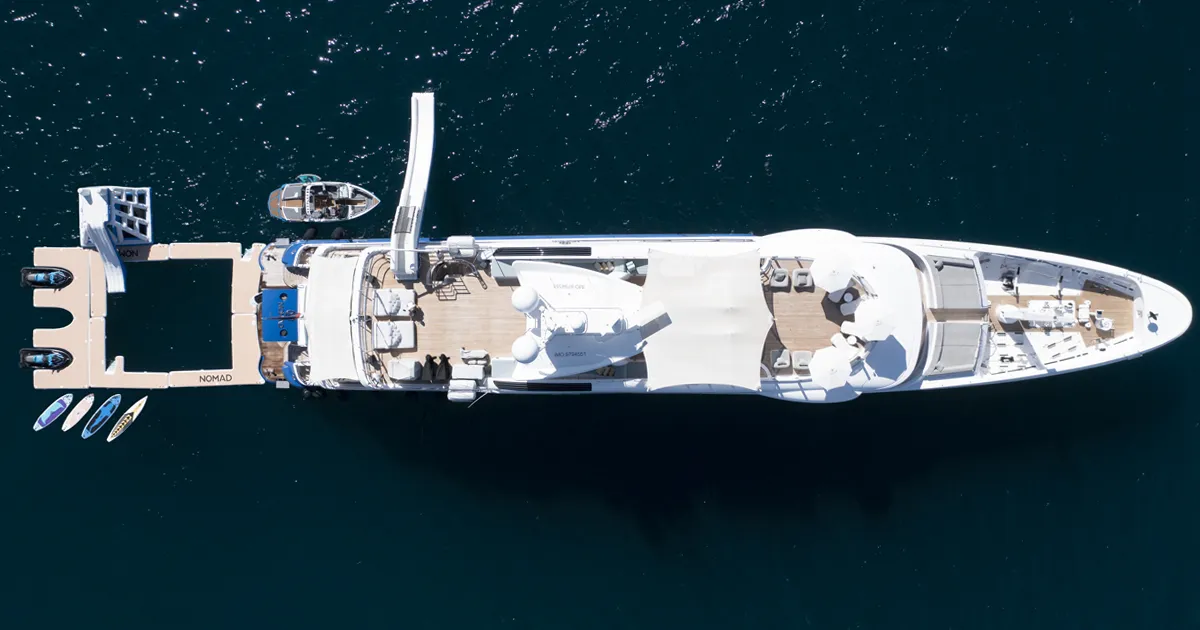
Materials define superyacht inflatable performance. Dropstitch stability, reinforced marine-grade fabrics, UV resistance, abrasion protection, and durable seam bonding help inflatables withstand saltwater, heat, and repeated charter-level use.
When it comes to superyacht inflatables, materials are not a detail. They are the foundation.
At a glance, many inflatable yacht toys appear similar. But beneath the surface, the materials used — and how they are applied — fundamentally determine how an inflatable performs, how long it lasts, and how safely it operates on board. In a marine environment, material choice is not about preference or price. It is about suitability.
Superyachts operate in conditions most inflatables were never designed to face. Saltwater, constant UV exposure, heat, wind, swell, repeated deployment, and tight storage spaces all place continuous stress on inflatable structures. This is why inflatables designed for leisure use often fail prematurely when introduced to life at sea.
Yacht-specific inflatables must be engineered differently from the inside out.
Why the Marine Environment Changes Everything

Inflatables designed for lakes, pools, or occasional beach use are typically exposed to controlled conditions. Calm water, limited UV exposure, infrequent setup, and generous storage space place relatively low demands on materials.
Superyachts are the opposite.
At sea, inflatables must withstand:
- Highly corrosive saltwater
- Constant sun and UV radiation
- Heat buildup on deck
- Wind, swell, and vessel movement
- Repeated handling by crew
- Frequent guest use across charter seasons
Each of these factors accelerates material fatigue if the inflatable is not engineered specifically for marine use. Fabrics stretch, seams weaken, coatings degrade, and surfaces lose grip. Over time, performance and safety are compromised.
Yacht-specific inflatable design starts with accepting these conditions as the baseline, not the exception.
Structural Integrity: Dropstitch vs Standard Construction
One of the most important material decisions in yacht inflatable design is structural construction.
Dropstitch technology uses thousands of internal fibres to connect the top and bottom surfaces of an inflatable, allowing it to maintain a flat, rigid shape under pressure. This rigidity is essential for platforms, walkways, and structures that must remain stable under load.
In contrast, standard inflatable construction relies on air pressure alone to maintain shape. While suitable for casual leisure use, it allows for flex, movement, and deformation under weight — something that becomes problematic on a moving sea surface.
For superyacht inflatables, structural stability is not optional. Platforms must feel predictable underfoot. Guests need confidence when stepping, running, or jumping. Dropstitch construction provides the controlled performance required for these environments, reducing unexpected movement and improving safety.
Reinforced PVC, TPU and Specialist Fabrics

Not all PVC is created equal. In marine environments, PVC must resist abrasion, UV degradation, and repeated folding without cracking or weakening. Yacht-specific inflatables rely on reinforced PVC formulations selected for longevity rather than short-term appearance.
In high-wear or performance-critical areas, specialist fabrics such as TPU are often used. TPU offers excellent abrasion resistance, improved UV stability, and greater flexibility over time, making it particularly suitable for zones that experience repeated contact or movement.
Material selection is never uniform across an inflatable. Different zones experience different stresses:
- Load-bearing areas require rigidity and reinforcement
- Contact points need abrasion resistance
- Folding zones must retain flexibility
- Exterior surfaces must resist UV and fading
Designing yacht inflatables means mapping these stress points carefully and selecting materials accordingly, rather than applying a single fabric across the entire product.
Shade Structures and Lightweight Performance Materials
Shade structures introduce a unique challenge. They must be strong enough to withstand wind while remaining lightweight enough for easy handling and minimal impact on stability.
In these cases, yacht-specific inflatables often use high-performance sail materials more commonly found in kite surfing. These fabrics offer an exceptional balance of strength, weight, and durability, allowing shade systems to perform reliably without adding unnecessary bulk.
This approach highlights a broader principle of yacht inflatable design: materials are chosen for performance, not familiarity. The best solution is often borrowed from adjacent marine or watersports disciplines where similar forces are already well understood.
Seams, Bonding and Load-Bearing Zones

Materials alone do not determine durability. How those materials are joined is just as critical.
Seams are often the first point of failure in inflatables exposed to repeated pressure and movement. Yacht-specific inflatables require advanced bonding techniques that maintain strength over time, even under cyclic loading.
Load-bearing zones must be reinforced to distribute stress evenly, preventing concentrated pressure that can lead to stretching or tearing. Reinforcement points, handle attachments, and connection interfaces all need to be engineered to work as part of a complete system.
This attention to construction detail ensures inflatables maintain their shape, performance, and safety characteristics across years of use rather than just a single season.
Longevity Is a Material Strategy
Longevity does not happen by accident. It is the result of deliberate material selection, thoughtful construction, and real-world testing.
Inflatables not designed for marine use often show visible degradation quickly: fading surfaces, softening structures, stretched fabrics, and compromised seams. In contrast, yacht-specific inflatables are engineered to age predictably and gracefully.
At FunAir, materials are selected based on how they perform after repeated exposure, not how they look on day one. This long-term approach ensures inflatables remain reliable across multiple charter seasons, changing crews, and varied operating conditions.
Longevity also supports sustainability. Products that last longer reduce replacement cycles, minimise waste, and deliver greater long-term value to yachts.
Why Material Choices Matter to Crew and Guests

For crew, better materials mean:
- Easier handling
- Reduced repair and maintenance
- Predictable performance
- Less downtime during busy charter periods
For guests, they mean:
- Stable, confidence-inspiring platforms
- Comfortable grip and surfaces
- Consistent performance regardless of conditions
- A seamless experience that feels effortless
Materials quietly shape the entire onboard experience. When they are chosen correctly, inflatables fade into the background, allowing the focus to remain where it should be: on fun.
Engineering Materials for Yachting
Yacht-specific inflatables are not leisure toys adapted for marine use. They are engineered products built around the realities of life at sea.
From dropstitch cores to reinforced fabrics, specialist sail materials to advanced seam bonding, every material choice contributes to safety, longevity, and usability. This is what separates inflatables designed for yachts from those designed merely to float.
When materials are engineered for yachting, inflatable toys perform consistently, integrate seamlessly into yacht operations, and stand up to years of real-world use.
Frequently Asked Questions
What materials are best for superyacht inflatables?
What is dropstitch and why is it used on yachts?
Why do yacht inflatables fade or weaken over time?
Are seams and bonding as important as materials?
How do materials affect guest safety?
This is the third article in FunAir’s “Designed for Yachting” series. The previous article explored What “Designed for Yachting” Really Means in Inflatable Toy Design. In the next blog in the series we explore how yacht inflatables can reduce workload on board.